

Apraksts
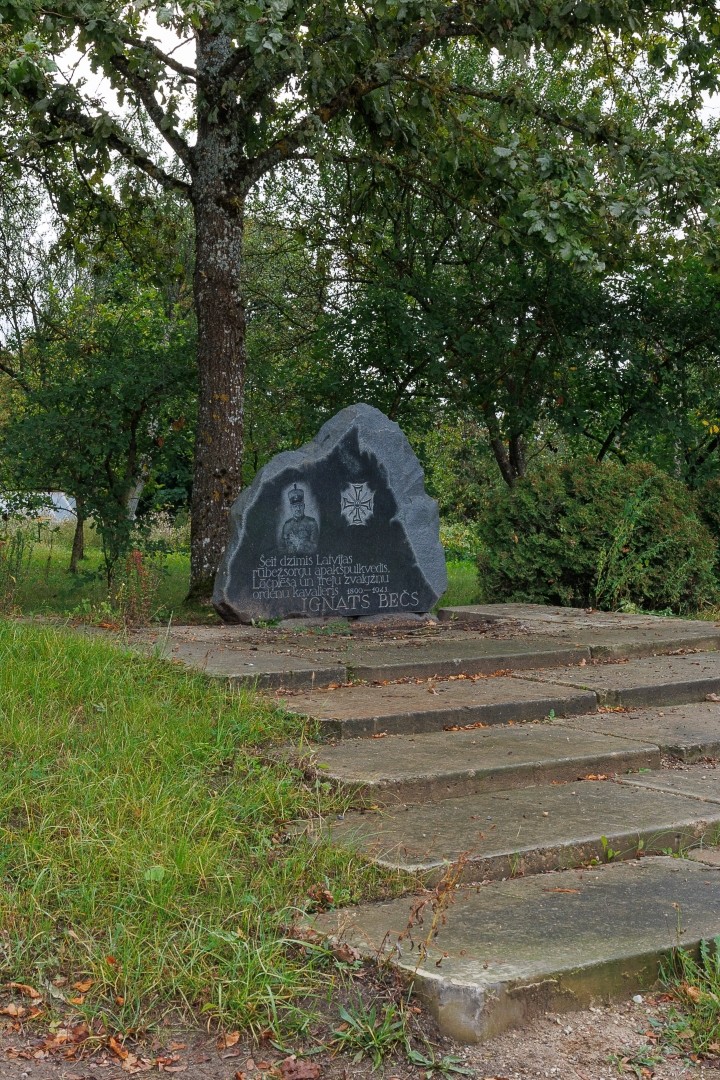
Ignats Bečs was born on 14 February 1890 in Litavnieki, Preiļi parish, into a family of six children - all sons, three of whom became soldiers. On 15 December 1918 he volunteered for the first combat unit of the Latvian Army - Colonel Oskars Kalpaks' battalion. On 30 September 1919, I. Bečs was promoted to captain and assigned as battalion commander of the Latgale Partisan Regiment. This regiment, part of the Kurzeme Division, fought to liberate Latgale from Soviet Russian forces. As a result of the January-February 1920 offensive, the Latvian Army reached the ethnographic borders of the Latvian nation in the east, regaining the ancient Latvian land of the Abrene region. All the soldiers of the Latvian Army particularly those in the Latgale Partisan Regiment and the Latgalians who were in other units of the army, fought in these battles with particular elation. On 2 February 1920, at Augšpils, Bečs led his battalion under heavy enemy fire to capture a heavily fortified hill, being the first to reach the top and open fire with a machine gun. His personal courage and skilled leadership repelled three enemy counterattacks, securing a strategically important position. Until 1936, Ignats Bečs held various positions in guarding Latvia's borders. In 1936 he was promoted to sub-colonel and appointed head of the police station in the town of Abrene. In 1939, he was transferred to a similar post in Preiļi. At the end of July 1940, he was arrested by the Cheka and taken to Daugavpils Prison along with his documents, orders and sword. On 14 June 1941, Ignats Beča was deported to Krasnoyarsk Krai, Russia, where he died in a gulag camp in 1943. On 11 November 1992, a memorial to Ignats Bečs was installed and unveiled in Litavnieki.